David Attenborough’s new documentary, A Gorilla Story, is all over the news right now. Of course, every time Sir Attenborough sneezes, it’s all over the news because he’s as close to divinity as we can get now that Jane Goodall is no longer with us. As he approaches his 100th birthday, we need to appreciate any opportunity we can get to hear from him.
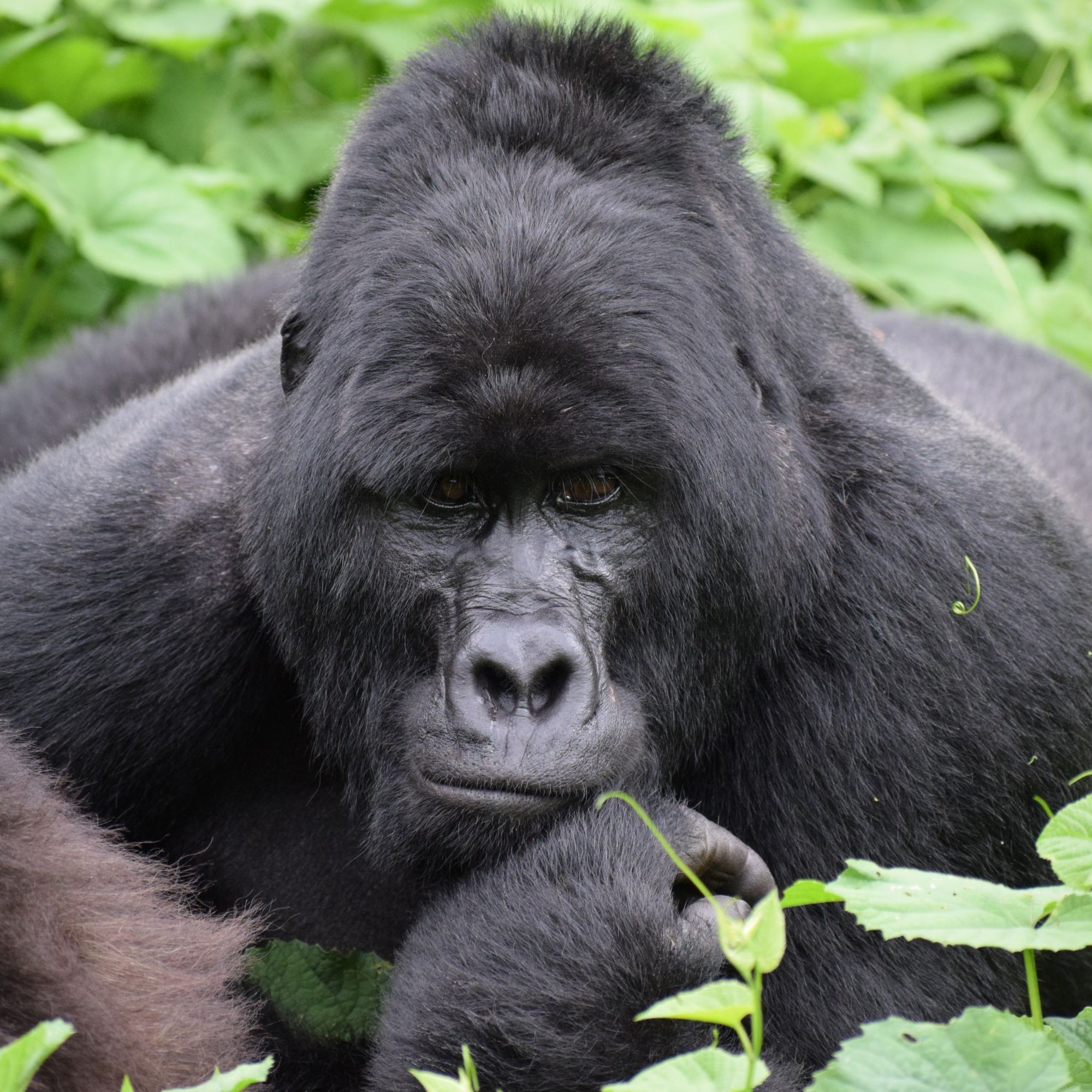
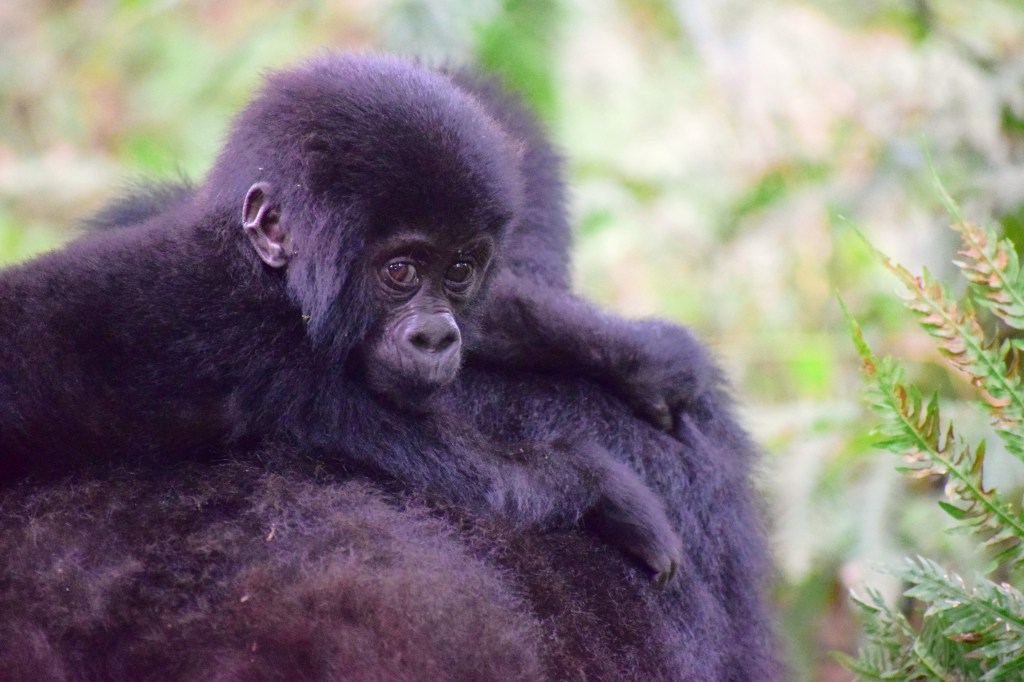
But this story matters to me more than most, because it is about mountain gorillas, a species I’ve been bringing people to visit for over a decade. In it, he narrates a story about the descendants of Pablo, a gorilla he met as an infant in Virunga National Park in Rwanda in 1979. Pablo went on to become the powerful silverback of a family that still thrives.
The fact that there is even a mountain gorilla family to visit today was not a given when he first brought attention to their plight nearly 50 years ago.
A Conservation Success Story
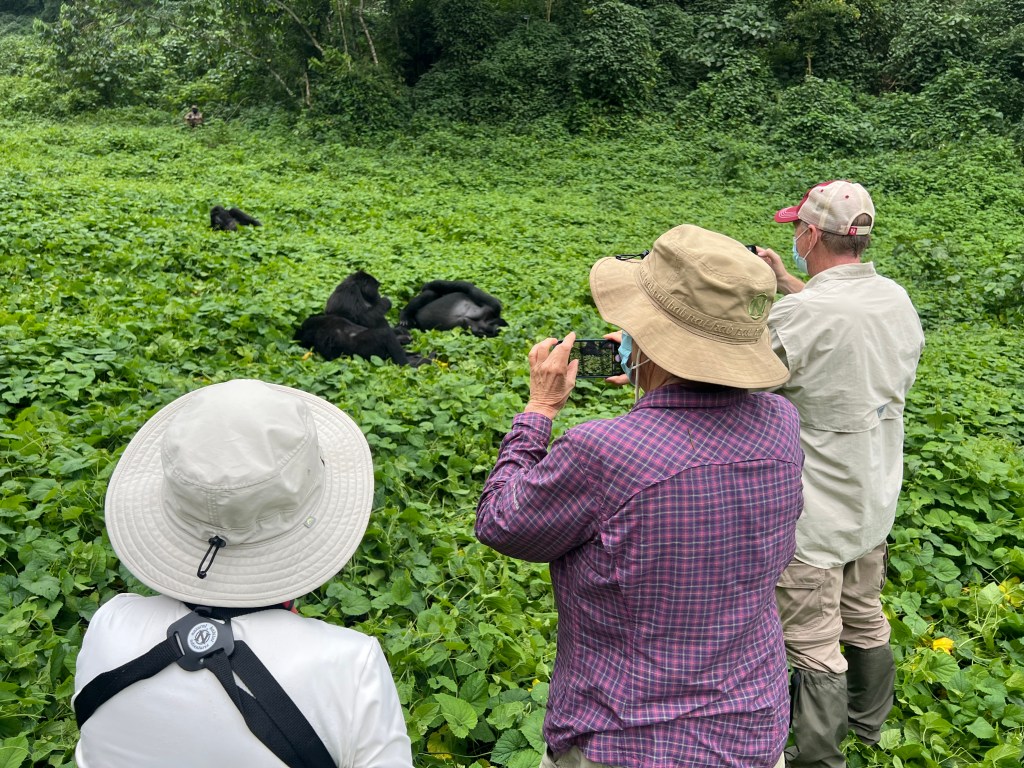
Mountain gorillas are the only great apes that are increasing in number (unless you include humans, which is more a philosophical argument than a biological one). When Dian Fossey was still living and working at her Karisoke Research Station at nearly 10,000’ in the Virungas, the total population had dropped to just a few hundred. With their population in decline and no tourism revenue at that time, the Government of Rwanda was preparing to give the last of their habitat away to a cattle ranch.
Long story short, two of Fossey’s grad students, Amy Vedder and Bill Weber, approached the Rwandan government with an outrageous idea – that people would pay good money to see these amazing animals in the wild. It went against every idea of what people would be willing to do. Safaris at the time meant easy cruises in vehicles or on foot on level savanna with megafauna everywhere you looked. Easy and high-reward. Who would want to climb for hours, straight up a mountain, through tangled jungle on muddy trails and slippery roots, in the hopes of seeing a single species?
As it turns out, there are lots of people crazy enough to want that. Mountain gorilla tourism has now developed into an industry that brings hundreds of millions of dollars into Rwanda and Uganda and has led to their protection and an increase in their population to over 1,000 today.
40 Baby Gorillas named in the 2025 Kwita Izina
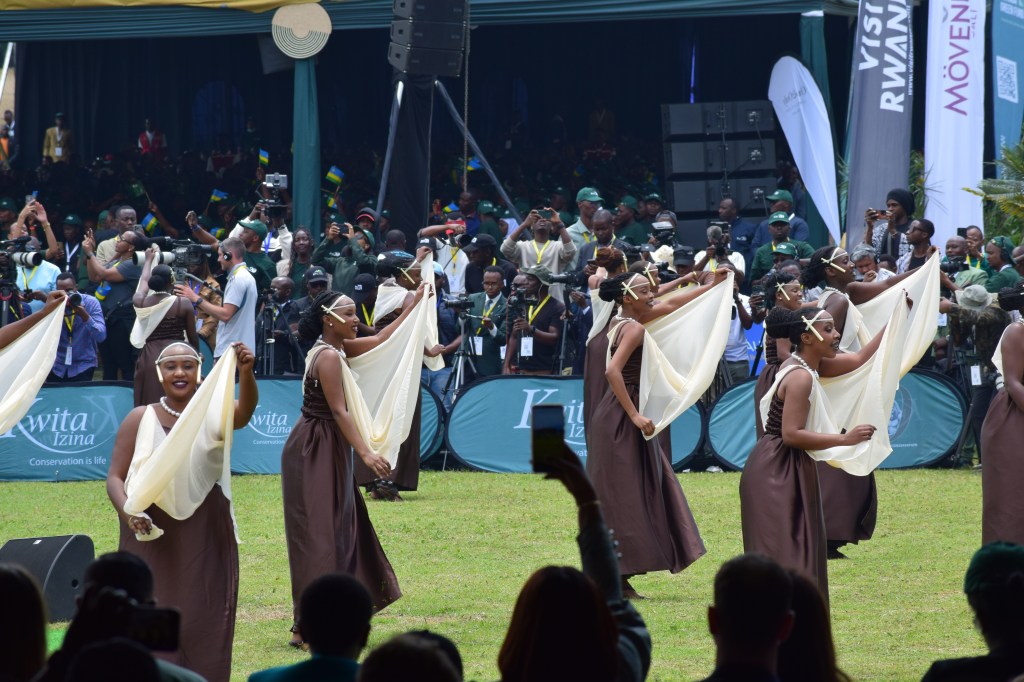
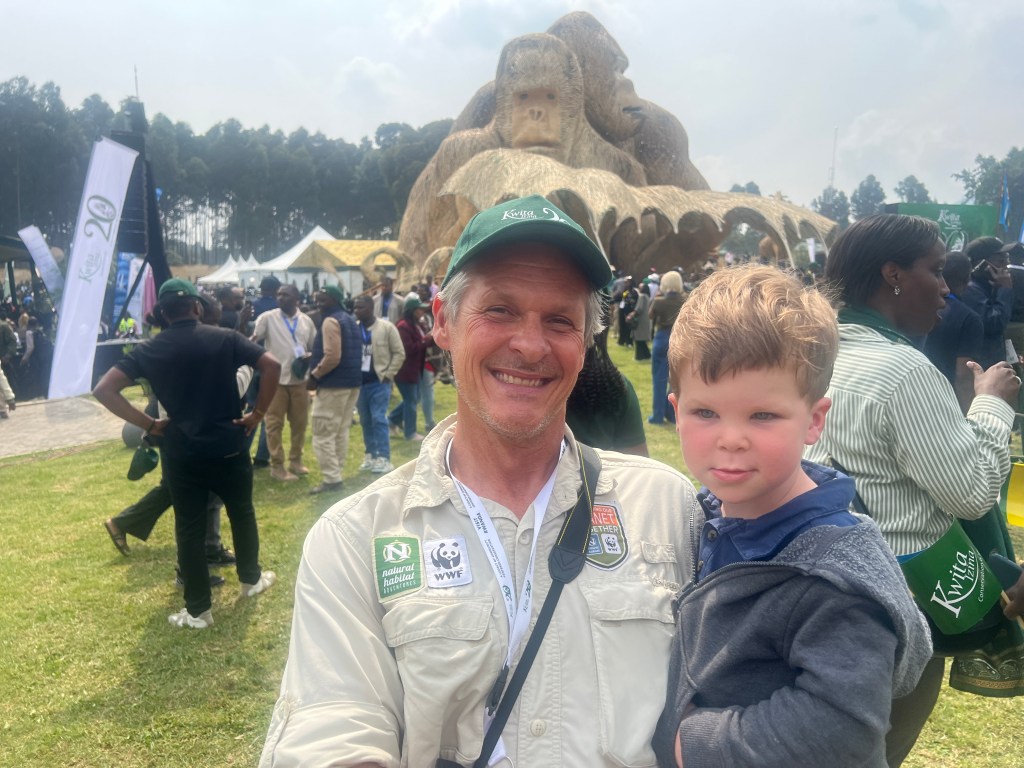
September 5, 2025, marked the 20th anniversary of Kwita Izina, a public naming ceremony that has become not only a symbol of Rwanda’s conservation success, but also a reminder that safeguarding wildlife requires collaboration between science, culture, and community. Each year, Rwanda throws a huge birthday party for all the baby gorillas born in the previous year. Each of them receives a name that will follow them for the rest of their lives. After years of wanting to attend this ceremony, I finally had the chance to be there for this 20th anniversary celebration.
The traditional roots of the Kwita Izina
This naming ceremony has deep roots in Rwandan culture. The direct translation of Kwita Izina is “to give a name.” For centuries, Rwandan families have gathered with their communities to give names to their newborn children that are imbued with meaning and tied to history. They may be given the name of an ancestor, a national hero, or a quality that the family hopes will play out in the child’s life. Regardless of the chosen name, the ceremony places the child within a family, a community and a lineage. Naming baby mountain gorillas in the same way forms a connection between the human and the wild that can be understood and celebrated by everyone.
What’s in a name?
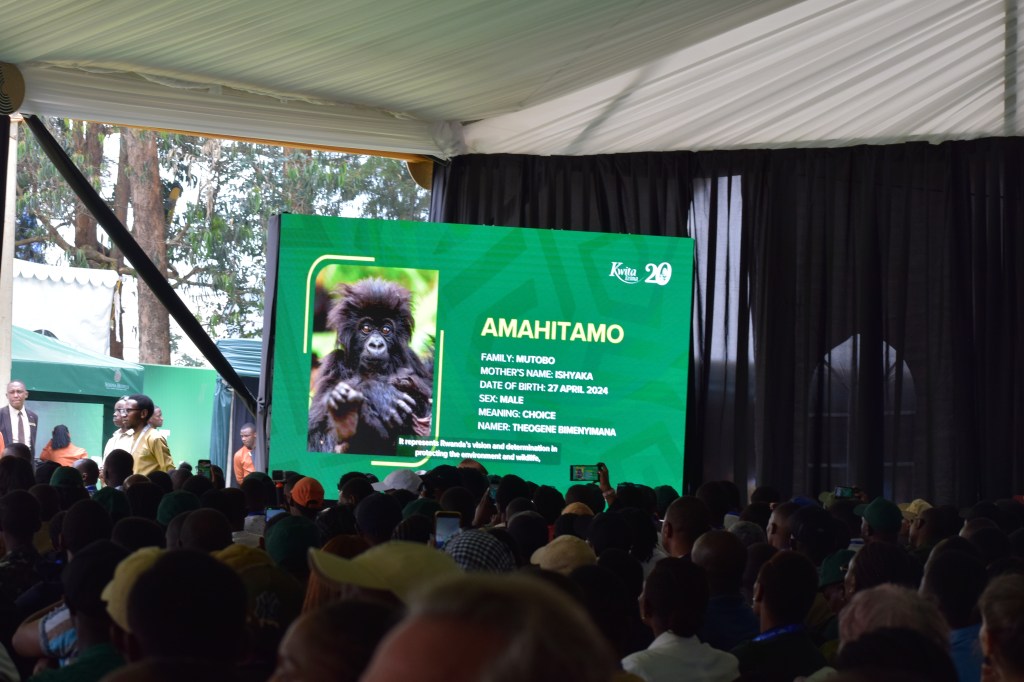
Long before the first public Kwita Izina in 2005, park rangers and researchers were quietly naming mountain gorilla infants in the Virunga Massif for monitoring purposes. Throughout their lives, both male and female mountain gorillas move to different families as they grow into, through, and out of breeding age. Each gorilla’s name becomes essential for keeping track of its health, parentage and social movements no matter where it ends up.
By giving baby gorillas names in this ceremony that draws global attention, Rwanda sends a message to the world that the protection of mountain gorillas is a national priority. The country’s success at protecting them is highlighted by the fact that 440 baby mountain gorillas have been named just in the 20 years that Kwita Izina has been celebrated.
These babies represent the success of mountain gorilla conservation efforts in a time when the world needs to hear that conservation works. With appropriate resources and on-the-ground support, we are bringing species back from the brink of extinction.
The day of the event
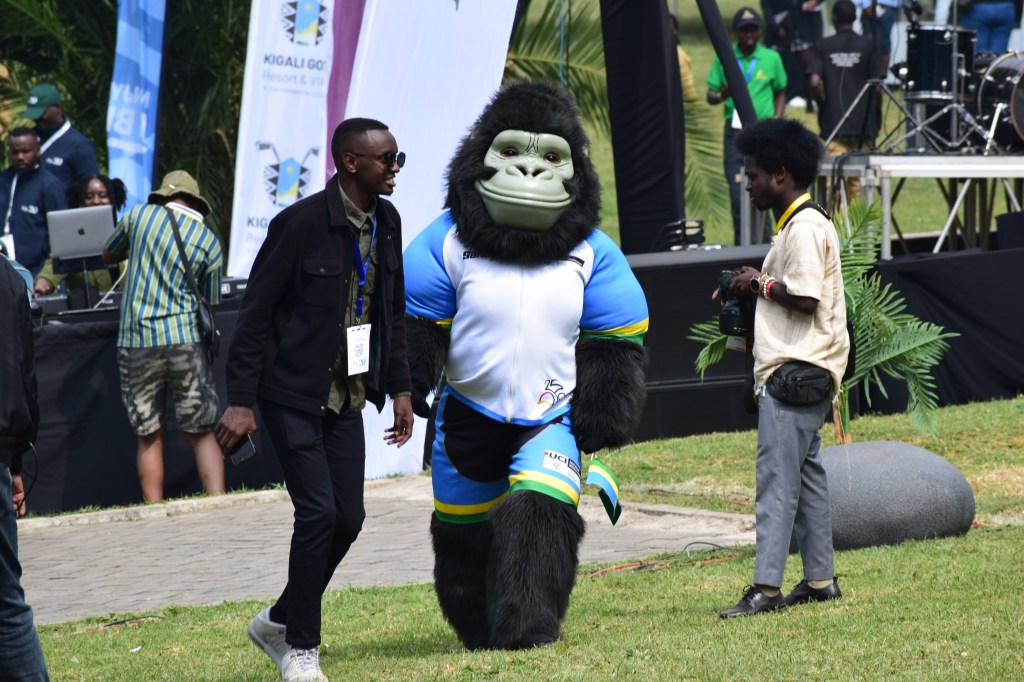
I didn’t realize quite what a big deal the Kwita Izina is when I first decided to attend. I kinda thought I could just decide to go and show up on the day of the event. Boy, was I wrong. Fortunately, I happened to mention my interest to a long-time friend and East Africa travel writer and podcaster Charlotte Beauvoisin (Diary of a Mzungu) who informed me of the need to be invited to the event weeks, if not months, in advance. Oops. Then I heard those magic words that every unprepared idiot hopes to hear – “Let me see what I can do.”
She connected me to Emmanuel Bugingo from Partners for Conservation, who went to heroic lengths over three days to secure an invitation for me as well as my sister-in-law and nephew who I was visiting in Kigali. It was still up in the air until the night before the event, when I got a dinner-time call from Emmanuel – “How quickly can you get to the conference center? You need to come now and bring all your passports!”
With a combination of good connections and smooth talking on his part, and sitting quietly and trying to look harmless on my part, I walked away late that night with three passes to the next day’s festivities.
Oh, this actually IS a big deal
It really sunk in as we approached the airport-level security at the entrance gate. Full metal detectors, bag searches, and well-armed members of the Rwanda Defense Force would certainly cause any potential troublemakers to think twice about trying to enter. The high level of security was understandable since invited dignitaries included royalty from Africa and Europe, high-profile celebrities and corporate leaders, famous football players, First Lady Jeannette Nyiramongi Kagame and the keynote speaker, Prime Minister Justin Nsengiyumva.
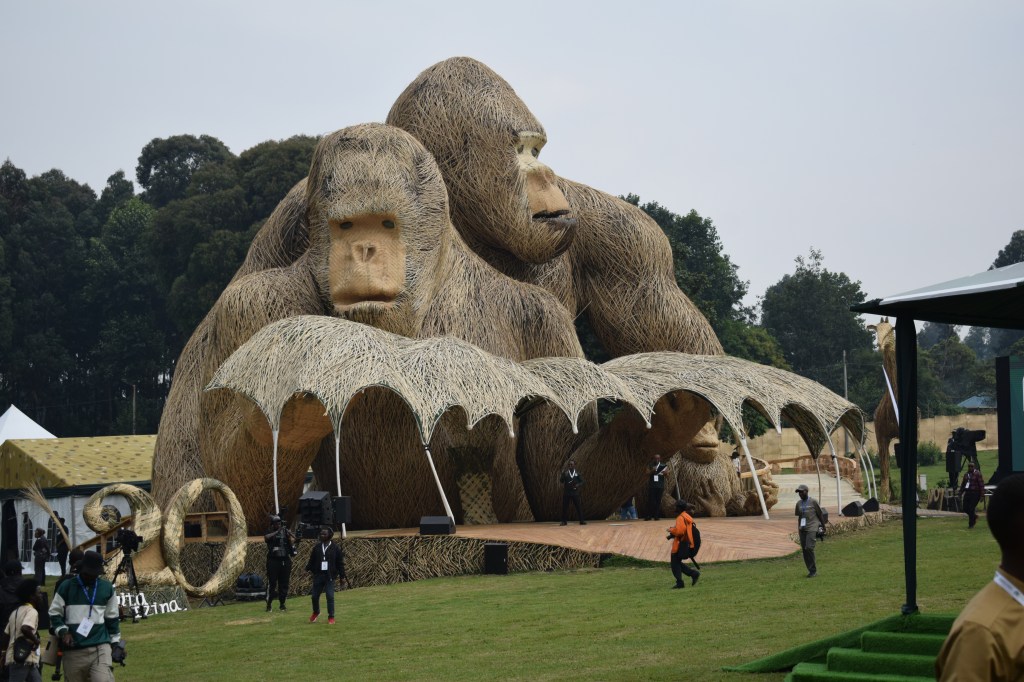
The true security guards only became visible after entering, though, while walking down the red carpet. Two gigantic rattan gorillas loomed over the stage, giving the impression that they would pick up anyone causing trouble and toss them clear of the festivities.
Big names and new names
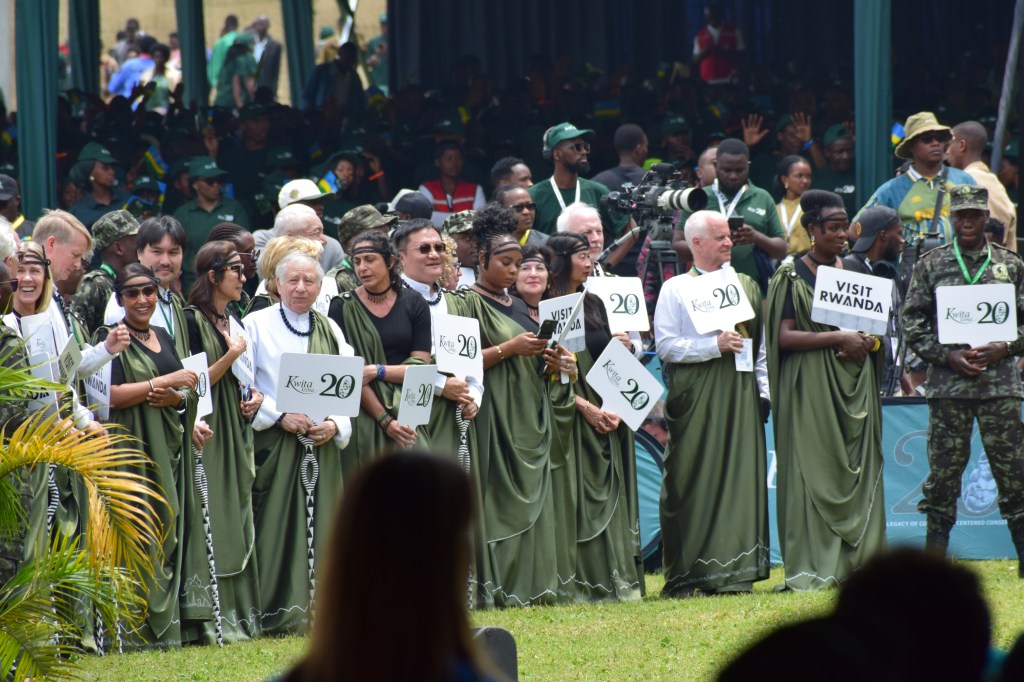
An impressive lineup of top Rwandan performers including Eric Senderi, Bwiza, Bulldogg and DJ Sonia kept the celebratory energy high. The musical lineup, combined with the fact that the MCs spoke strictly in the language of Kinyarwanda for the first half of the event, appropriately placed the focus on the citizens of Rwanda who are the true stewards of the mountain gorillas. Local community members, wearing green Kwita Izina caps and waving Rwandan flags, filled the vast majority of the seats under the circus-sized shade tents.
Part of the global allure of Kwita Izina lies in the distinguished guests who are invited to bestow names. Their involvement amplifies conservation’s message across continents.
This year’s “namers” included famous African performers, big Hollywood names, Rwandan rangers and porters, and even a Danish princess. They first trekked up into the Virungas to visit the new babies in the days leading up to the event and then chose a name that followed the tradition of highlighting a valued characteristic.
It was fun listening to each American and European struggling to pronounce the Rwandan name of their baby gorilla. That fumbling was better, though, than the actress Michelle Yeoh, who couldn’t be bothered to even try. That was lame.
Perhaps most importantly, each name is a reminder that these gorillas are not statistics, but individuals with histories, families and distinct personalities. By ceremonially and publicly naming them in the same way that Rwandans name their children, an indelible bond forms between the human and the wild, and the past and the future.
When we give something a name, we give it a place in our hearts. And when it comes to conservation, that is where protection begins.


Leave a Reply