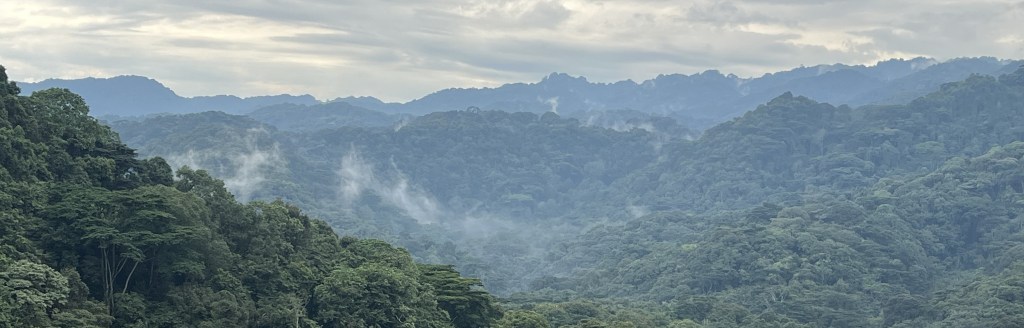
This page curates links to articles and reporting from external sources about conservation in the Congo Basin rainforest and Grauer’s gorillas. None of this content is my own — all credit belongs to the original authors and publications. I share these links to help raise awareness of the issues facing one of the most important ecosystems on earth.
Last updated: August 13, 2026
Archive
August 2026
A New IUCN Green Status Assessment on the Eastern Gorilla Shows Both an Urgent Decline and a Path Forward for Species Conservation
Jane Goodall Institute — August 6, 2026
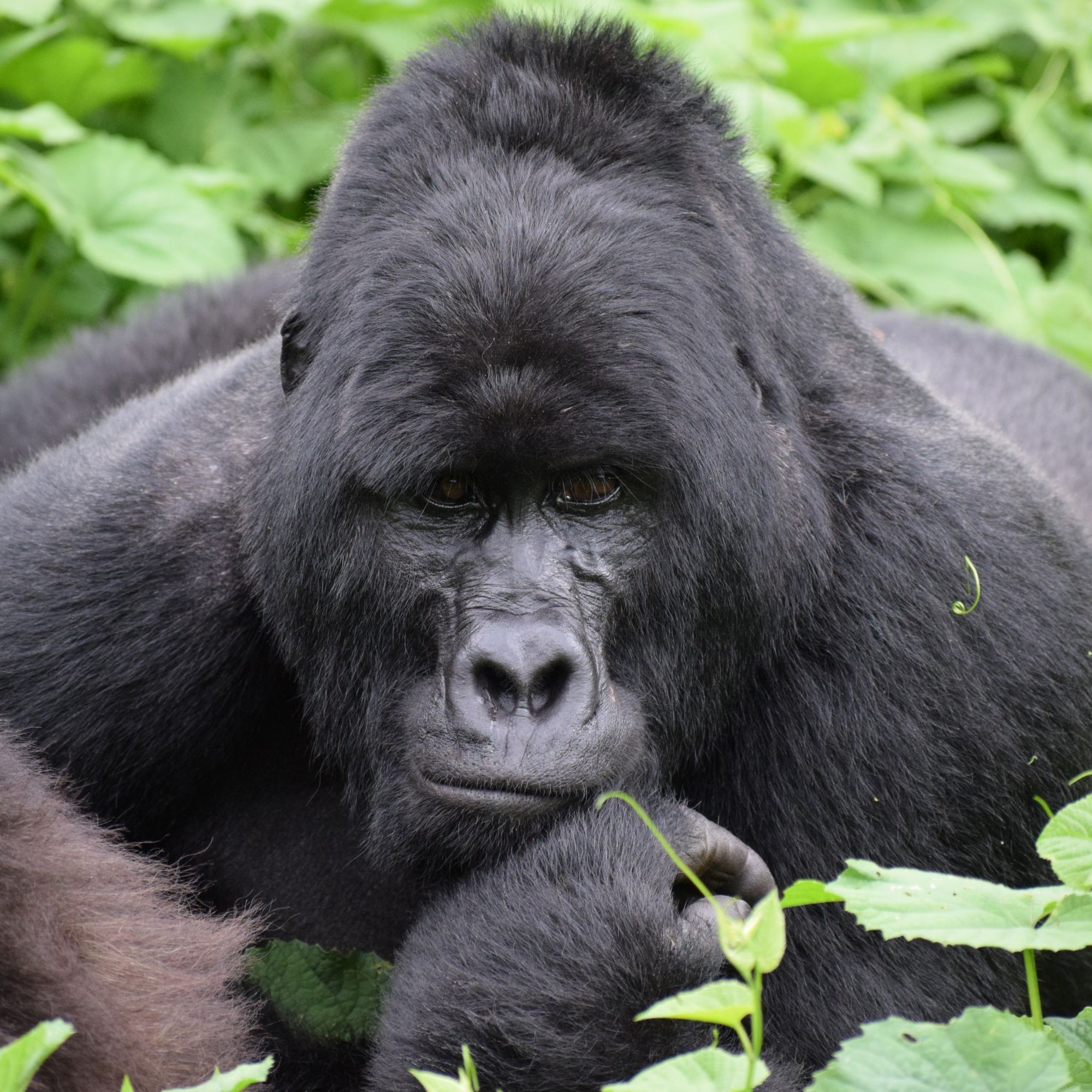
The IUCN released its first-ever Green Status Assessment for the eastern gorilla, evaluating Grauer’s gorilla and the mountain gorilla separately. Grauer’s gorilla — a focal species of JGI’s Great Ape Action Plan for eastern DRC — has suffered steep declines across much of its range over the past two decades, while mountain gorillas have grown from roughly 620 individuals to over 1,000, evidence that sustained, community-centered conservation can drive real recovery.
July 2026
International Effort Launched to Save DRC’s Endangered Animals Amid Ebola and Armed Conflict Threats
In Defense of Animals — July 20, 2026
An outbreak of Bundibugyo ebolavirus is spreading through North Kivu Province, compounding threats from armed conflict in and around Virunga National Park, home to nearly half the world’s remaining mountain gorillas. In Defense of Animals is partnering with local civil society organization IDPE to fund a dedicated animal rescue ambulance, enabling safer rescue operations for wildlife caught between epidemic disease and militia activity.
Dr Congo Adopts 2026–2035 National Forest Policy to Strengthen Congo Basin Conservation and Climate Resilience
African Sustainability Matters — July 14, 2026
The DRC’s Council of Ministers approved a new National Forest Policy covering 2026–2035, aimed at strengthening forest governance, recognizing customary and Indigenous land rights, and mobilizing climate finance for one of the world’s most important tropical forest ecosystems. Implementation — particularly around illegal logging and enforcement capacity — will determine whether the framework delivers measurable change on the ground.
June 2026
Four Years to Earn Their Trust: Habituating Bonobos in DRC’s Salonga National Park
Mongabay — June 11, 2026
At Africa’s largest tropical rainforest reserve, researchers at Inkomu camp are undertaking a painstaking four-year effort to habituate a group of approximately 60 wild bonobos to human presence. The habituation program aims to unlock opportunities for scientific research and sustainable ecotourism while generating local livelihoods, though park authorities remain vigilant about biosecurity protocols as Ebola cases rise in eastern DRC. Early progress shows bonobos now tolerate limited human observation for two to three hours at a time, with researchers working before dawn to track them from previous night nesting sites.
dClimate Partners with DRC on Carbon Registry Development
Causeartist / dClimate — June 3, 2026
A strategic Memorandum of Understanding between dClimate and the Democratic Republic of Congo aims to safeguard hundreds of thousands of hectares of Congo Basin rainforest and peatlands through decentralized climate data infrastructure. The initiative aligns with Article 6 of the Paris Agreement and will deploy blockchain and CYCLOPS—a digital measurement, reporting and verification platform—to prevent deforestation while sequestering an estimated 100+ million tonnes of CO2. The project emphasises community empowerment by leasing carbon sequestration rights rather than purchasing land, preserving local sovereignty and Indigenous rights.
Inside the World’s Only Bonobo Rescue Sanctuary in DRC
Africanews — May 13, 2026
At Lola ya Bonobo near Kinshasa—Earth’s only sanctuary dedicated exclusively to bonobos—caregivers like Micheline Nzonzi, who has spent over 20 years raising orphaned infants, provide round-the-clock nurturing to young apes whose mothers were killed by poachers supplying the bushmeat trade. The sanctuary documents how bonobos share 99% of their DNA with humans yet face an uncertain future, with populations declining from ~100,000 in the 1980s to roughly 20,000 today. The piece explores rehabilitation, eventual release efforts, community education campaigns, and conversations with conservation experts about rethinking approaches to addressing the underlying economic drivers of the bushmeat crisis.
May 2026
From Virunga to Kinshasa: The DRC Embarks on a Bold Conservation Gamble
Mongabay — April 29, 2026
Deep reporting on the Kivu-Kinshasa Green Corridor — described as the largest conservation and development initiative ever proposed in Africa — exploring how it grew from Virunga’s community-centred model, what it would mean for 540,000 square kilometres of Congo Basin landscape, and the significant governance questions it raises about overlapping land concessions, community benefit, and how conservation can replace a war economy with one built on livelihoods and hope.
Research on Challenges Facing Congo Basin Swamp Forests Wins 2026 Bormann Prize
Yale School of Environment — May 2026
Yale doctoral candidate Katherine Meier wins the F. Hermann Bormann Prize for her year-long fieldwork at the Lac Télé Community Reserve in the Republic of Congo, interviewing 55 conservation managers and community members about how local people navigate seasonal flooding, resource conflicts, and ancestral ties to the Basin’s peatland swamp forests — one of the most carbon-dense ecosystems on Earth.
African Elephant Genomes Reveal Ancient Mixing — and Modern Pressures
Mongabay — May 8, 2026
A study sequencing 232 elephant genomes across 17 African countries finds evidence of recent forest-savanna hybridisation in Garamba National Park in the DRC, while showing that human activity — roads, logging, agricultural expansion — is now the dominant force shaping where elephants can survive across the continent.
Virunga National Park: Ten Gorilla Births Recorded in 2026
Virunga National Park — May 2026
Since the start of 2026, Virunga’s community trackers have recorded ten gorilla births across the park’s eleven monitored families — up from eight in 2025 — including the rare birth of twin males in the 59-member Bageni family in January. Park authorities note this as a positive sign for the mountain gorilla population despite ongoing security pressures in eastern DRC.
Forests to Frontlines: Oil Expansion Threatens Congo Basin Conservation
Earth Insight — 2025
A detailed spatial analysis finds that more than half of the DRC (53%) is now covered by oil block licences awarded in 2025 — overlapping 8.3 million hectares of protected areas, 8.6 million hectares of Key Biodiversity Areas, and 64% of intact tropical forests. Of particular concern, 72% of the Kivu–Kinshasa Green Corridor now overlaps with oil concessions, and 63% of all community forests fall within oil block boundaries — directly threatening Indigenous land rights and undermining the conservation gains documented across this page.
He Survived a Deadly Attack. Now He Is Calling for Better Working Conditions for Rangers in DRC
Mongabay — May 19, 2026
Profile of Emmanuel Bahati Lukoo, a ranger who narrowly survived a 2018 Mai-Mai attack in eastern DRC and is now calling publicly for improved pay, equipment, and mental health support for rangers protecting parks like Virunga and Kahuzi-Biega. Set against the broader crisis facing DRC’s conservation frontline: rangers who face armed conflict, chronic underfunding, and institutional neglect while guarding some of the world’s most important wildlife habitat.
Bonobo Protection in the DRC Shows Results
African Wildlife Foundation — May 2026
A decade-long survey revisiting Lomako-Yokokala Reserve finds that sustained ranger patrols and community engagement are reducing hunting pressure on bonobos — one of the world’s most endangered great apes, found only in the DRC. A 2023 study applying the same survey design used in 2010 shows improved conditions for the species, pointing to a more hopeful trajectory after more than a decade of protection by AWF and local partners in the Maringa-Lopori-Wamba landscape.
Boost for Gorilla Conservation in DRC
Southern & East African Tourism Update — May 14, 2026
Coverage of the Dian Fossey Gorilla Fund’s expansion in the Nkuba Conservation Area, where community-managed forests now cover a further 700 square kilometres of eastern DRC under a 25-year government management agreement. The piece focuses on what the model means for critically endangered Grauer’s gorillas, the majority of whom live outside national parks and depend on community forest governance for survival — making the Concessions Forestières des Communautés Locales framework central to their protection.
April 2026
In the Hardest Places, Conservation Is Holding the Line
African Wildlife Foundation — April 7, 2026
AWF’s 2025 Annual Report documents community-led conservation in the most remote DRC landscapes — including Bili-Uélé and Maringa-Lopori-Wamba — where the TANGO herder-farmer mediation programme (which has reduced conflict by 62% in comparable landscapes), community land tenure recognition, and school renovation are building lasting local ownership of forest protection.
Guardians of the Congo Basin
African Wildlife Foundation — April 2026
AWF details its ongoing work protecting the Congo Basin’s wildlife through anti-trafficking operations, rapid-response rescues, and community partnerships — including 29 pangolin rescues in Cameroon’s Dja landscape between 2025 and 2026, and chimpanzee rehabilitations ahead of potential release.
ICEYE and the Jane Goodall Institute Deploy SAR-Based Deforestation Monitoring to Protect Congo Basin Wildlife Habitats
Jane Goodall Institute / ICEYE — April 22, 2026
ICEYE and the Jane Goodall Institute have partnered to deploy satellite-based radar (SAR) monitoring across conservation corridors in the eastern DRC, where persistent cloud cover makes optical satellite systems unreliable. The system provides near-real-time detection of deforestation and illegal mining to support ranger patrol planning and enforcement in chimpanzee and great ape habitat.
Dian Fossey Gorilla Fund Scales Community-Led Wildlife Protection in the DRC
Dian Fossey Gorilla Fund — April 21, 2026
Marking 25 years of conservation work in the DRC, the Fossey Fund has secured official recognition for an additional 700 square kilometres of community forest concessions in the Nkuba Conservation Area, bringing the total legally titled portion to 75% of 2,400 square kilometres. The community-managed model gives local families permanent land rights and the ability to sustainably manage their ancestral forests.
DRC: Can the Kivu–Kinshasa Green Corridor Turn a War Economy into One of Hope?
Mongabay — April 21, 2026
An examination of President Tshisekedi’s proposed Green Corridor — a conservation and development initiative spanning over 544,000 square kilometres from eastern to western DRC — that aims to replace extractive and conflict-linked economies with community-based conservation, though governance questions remain about overlapping land concessions.
Can Nature Outcompete War in Eastern Congo?
Mongabay — April 13, 2026
An in-depth interview with Virunga National Park director Emmanuel de Merode, who argues that conservation in conflict-affected eastern DRC requires addressing energy, livelihoods, and local economic systems. The piece explores Virunga’s integrated model and the proposed national-scale Green Corridor.
‘I Like Impossible Missions’: A Conservationist’s Mission to Turn Around Salonga’s Fate
Mongabay — April 9, 2026
Profile of Spanish conservationist Luis Arranz, co-director of Salonga National Park — Africa’s largest tropical forest national park — who is working to strengthen wildlife protection and community livelihoods while envisioning Salonga as part of a larger Congo Basin tourism corridor.
Why Conservation Needs Stories of Progress
Mongabay — April 7, 2026
Mongabay founder Rhett Butler argues that solutions journalism — documenting what works, under what conditions, and with what limitations — can counter news avoidance, restore a sense of agency, and help practitioners adapt successful conservation approaches across regions.
A Congo Basin-Led Bioeconomy Could Boost Central Africa’s Green Transition
Mongabay — April 6, 2026
An analysis arguing the Congo Basin can lead Central Africa’s green transition by building a bioeconomy that prioritizes local value creation. Notes that forest cover has declined 5% over two decades due to logging, mining, and agricultural expansion.
Scaling Congo Basin Rainforest Protection: How Gabon Infini Redefines Project Finance for Permanence
Intelligent Living — April 2, 2026
Examines how Gabon’s $180 million “Project Finance for Permanence” model ties conservation funding to verified milestones, treating rainforest protection like a performance contract rather than a traditional grant.
World Bank Approves $394.8 Million Programme to Transform Congo Basin Forest Economies
World Bank — April 1, 2026
The World Bank approved a $394.83 million first phase of the Sustainable Congo Basin Forest Economies Program covering Cameroon, CAR, and the Republic of Congo — aiming to place 8 million hectares under sustainable management and generate 220,000 jobs as part of a larger $1.02 billion initiative.
March 2026
Conservation Depends on Rangers. Their Wellbeing Is Often an Afterthought
Mongabay — March 31, 2026
Following the deadly attack on Upemba National Park, this piece explores the broader crisis facing rangers across protected areas — from violence and trauma to inadequate mental health support.
Connecting Livelihoods to Protect Forests in the Congo Basin
CIFOR-ICRAF / Forests News — March 26, 2026
Reports on linked initiatives in the Yangambi landscape of DR Congo where agriculture, energy, and enterprise programs are reducing deforestation while strengthening livelihoods. In 2025, over 300,000 trees were planted and 2,100+ hectares of degraded land restored.
Forest Management Plan Validation Gradually Reduces Forest Loss in Congo Basin Concessions
Nature Communications Earth & Environment — March 2026
A study analysing two decades of satellite data finds that logging concessions with validated forest management plans experienced 47% less forest loss than those without — with effects persisting up to 19 years across five Congo Basin countries.
Upemba National Park Staff Recount Assault That Left Seven Dead
Mongabay — March 24, 2026
First-person accounts from park staff who survived a coordinated pre-dawn attack on Upemba National Park by an armed separatist group — the deadliest assault on African conservation workers since 2020.
How a Community Defended Its Ancestral Forest from Logging
Mongabay — March 16, 2026
In northeastern Gabon, the village of Massaha used participatory biocultural mapping to document ancestral land use and sacred sites, ultimately halting industrial logging in their rainforest.
‘Ancient’ Carbon Venting from Lakes in the Congo Basin Peatlands: Study
Mongabay — March 2026
New research finds that lakes in the Congo Basin’s vast peatlands are releasing carbon that has been stored for thousands of years, raising questions about carbon dynamics and climate implications.
Growing Number of Indigenous Twa Forced Out of DRC’s Forests and Into Towns
Mongabay — March 11, 2026
Reports on the accelerating displacement of Indigenous Batwa communities from Congo Basin forests due to protected area expulsions, insecurity, and land conflicts — and the loss of millennia of ecological knowledge.
February 2026
Partnering Up to Run a DRC Reserve: Interview with Forgotten Parks’ Christine Lain
Mongabay — February 6, 2026
An interview with the director of Upemba National Park about the challenges of managing a protected area in conflict-affected southeastern DRC, including ranger safety, community partnerships, and wildlife recovery.
What’s Next for the Major Pledge to Halt & Reverse Congo Basin Deforestation?
Mongabay — February 5, 2026
Covers the implementation challenges behind the $2.5 billion Belém Call to Action for Congo Basin Forests, including the need for direct community funding, traceable financing, and coordination across Central African nations.
January 2026
Reconnecting Pathways, Restoring Trust, and Preparing for the Future in the DRC
African Wildlife Foundation — January 19, 2026
AWF and the Institut Congolais pour la Conservation de la Nature (ICCN) report on 2025 progress in the Maringa-Lopori-Wamba and Bili-Uélé landscapes — including the rehabilitation of 15 bridges to reconnect communities and rangers to remote forest areas, expanded rights-based governance, community land tenure recognition, and strengthened monitoring systems for wildlife and forest resources.
In the Race for DRC’s Critical Minerals, Community Forests Are on the Frontline
Mongabay — January 16, 2026
In the DRC’s copper-cobalt belt, local communities are using forest concessions to secure land titles and resist eviction by mining operations backed by international actors competing for critical minerals.

